Fluke Türkiye
FLUKE TEST VE ÖLÇÜ ALETLERİ SEMİNERİNE DAVETLİSİNİZ
SİZE BÜYÜK HABERLERİMİZ VAR!!
|
Motorlar ve Sürücülerde karşılaşılan sorunlar ve arıza bulma yöntemleri
12 Haziran 2012, Adana MAVİ SÜRMELİ OTEL
13 Haziran 2012, İzmir BEST WESTERN PLUS HOTEL KONAK
14 Haziran 2012, İstanbul HOLIDAY INN AIRPORT HOTEL
|
Seminerlerimiz sınırlı sayıda katılımcı ile gerçekleştirilecektir.
Detaylı bilgi ve katılım talepleriniz için bizimle Sibel.canli@fluke.com email adresinden iletişim kurabilirsiniz.
Learn how to benefit from thermography in your work
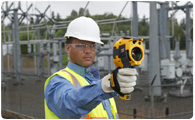
Thermography can increase the effectiveness of your work. And Fluke has made it really easy to use, so you can quickly benefit from it in troubleshooting, maintenance and diagnostics. A thermal imager has become an essential tool in HVAC, civil engineering, plumbing and all disciplines where a thermal image of a component, installation, situation or building reveals practical information you can act on. To help you understand the technology, Fluke has launched a series of application-specific webcasts.
Choose the webcasts that suit your work
These four webcasts from the Fluke Academy bring you up to date on using thermal imagers in your daily work. You can register to view them at a time that suits you. The webcasts provide a practical introduction to
Building heat Losses - learn about insulation, air infiltration and thermal bridging issues, and see how you can identify the common causes of heat losses
HVAC - learn how to use thermal imaging to investigate heating and cooling systems, and get tips on improving equipment operation and efficiency
Plumbers – see how a thermal imager can help you detect hidden leaks and moisture, and get tips on carrying out inspections and restorations
Roofers – understand the benefits of thermography in roofing applications for most types of roof, and get practical tips on carrying out inspections
Be a better troubleshooter
Learn the ABC of Portable Oscilloscopes
Fluke is offering a special, internet-based training course (in 3 parts) covering portable, handheld oscilloscopes. It’s designed for those who understand digital multimeter measurements, but who need to troubleshoot electronic, electro-mechanical and electrical systems using an oscilloscope.
The ABC of Portable Oscilloscopes covers:
- The fundamentals of capturing and analyzing waveforms using an oscilloscope
- Techniques and processes to help you troubleshoot electrical and electronic signals
 |
|
Part A: Oscilloscope Theory of Operation
This segment covers the basic theory of how digital storage oscilloscopes work. Understand key functions like sampling, memory depth, triggering, vertical sensitivity, horizontal time base and input isolation Play video » |
|
 |
|
Part B: Capturing and analyzing unknown waveforms
In this segment, you’ll learn how to capture and display a stable waveform in a few easy steps. Once you’ve got a waveform, how do you know if it’s good or bad? We break waveforms down into key elements so you can understand the fundamentals of analyzing waveforms, recognizing common qualitative waveform issues. Play video » |
|
 |
|
Part C: Techniques and processes to help you troubleshoot electrical and electronic signals.
If a disturbance happens randomly, how do you capture it? The final segment reviews oscilloscope functions and techniques for capturing waveform anomalies and disturbances. You’ll learn tricks and tips to help you capture random events. Play video » |